

Chinese Nutritional Therapy from a Natural Perspective
by Guest Blogger, Bonnie Koenig, Licensed Acupuncturist
In ancient China, food was medicine and medicine was food. Nothing separated the medicine from the food eaten. Even today, in the East there is much less separation of foods and medicine, allowing a number of home remedies based on the ancient wisdom of food.
In the West, we understand that different foods have different nutrients. We understand that garlic has anti-viral properties. Most people don’t eat garlic for the anti-viral properties but because they think it tastes good. Food should taste good. It should also be healing.
There are many books that discuss healing with food using Chinese Medical Traditions. I have used many of these concepts in working with my own body and made recommendations based on these theories to my patients. From the point of view of an acupuncturist and herbalist, an herbal remedy is a stronger version of the same types of things that might be ingested in the home.
For instance, if one had a cold, with chills and muscle aches, a tea made with ginger and licorice might be made. Licorice root is used in almost all herbal formulas. Today to say licorice, one thinks of a candy that is mostly sugar. Homes today are unlikely to have ginger root, must less licorice root.
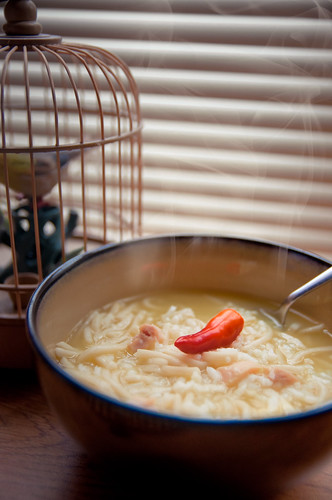
Chicken soup really does heal. The canned stuff off the shelf probably won’t help. However, homemade soup with real chicken broth is very warming. Very often the best thing that can be done for a cold with fever and chills is to break a sweat. Chicken soup does this well. It is both warm in temperature and chicken itself has a warm energetic nature. Adding in scallions and perhaps some ginger and garlic for flavor can make it even warmer and will add a heavier sweat.
If there is some phlegm, consider having some oatmeal soaked overnight and add cinnamon to it. Cinnamon is also warming. It can help warm the body but it can also help that sinus congestion get moving, creating a drippier nose but clearing the sinuses.
Oatmeal that is not properly processed is hard for the body to digest. Creating more stress for the body in the digestive system means that any headway made with the herbs will have minimal effect, so be sure to soak your oatmeal first.
A tea made with ginger and cinnamon can be helpful for a cold. Both herbs are warming (so neither should be used with a sore throat). The recipe I have seen calls for about 10 slices of ginger the slice of a quarter and three sticks of cinnamon, which is a fairly hefty amount. I usually just mix the herbs until I like the taste and don’t use a recipe. The herbs should be steeped for 25 minutes before drinking.
The ingredients in each of these example recipes are also used in the herbal formulas that I might make up as an acupuncturist. In some cases, a cold is bad enough that anything but a properly prepared formula is unlikely to help. However, in many cases, eating properly the minute symptoms appear can be very helpful.
People often ask what I have to help a cold or flu on hand. The problem I have is that often they are in my office for herbs after they have been sick for a few days. At that time I need stronger herbs to assist them in healing. It may take more time if their body is not already fighting off the cold. It is important to begin treatment at the first sign something might be wrong.
Having a bit of homemade chicken broth at the first sign of achy muscles or having some ginger tea might fight off the cold before it invades. If the broth doesn’t cause any sweating sitting in a warm Epsom salt bath can be helpful as well. It’s important that if you want to treat a cold naturally you treat your body at the first sign of symptoms. You don’t want to wait days, allowing your body to get run down and then expect home remedies to help.
The more we get in tune with our body and our diet, the easier it becomes to treat minor illnesses with the foods, herbs and spices that we may already have on hand. Ginger and garlic in a soup is just as good as ginger and garlic in tea (if not better). You can play creatively with any herbal remedy if you keep in mind that herbs are food as well as medicine.
Recommended for Further Reading:
Healing With Whole Foods: Asian Traditions and Modern Nutrition (3rd Edition)
by Paul Pritchard. Pritchard is an advocate of a vegetarian diet, however his information about diet and Chinese medicine is excellent. He offers advice on the energetics of foods as well as a nice lay person introduction into Chinese Medical theory.
Chinese Healing Foods  by Rosa LoSan and Suzanne LeVert. A very nice book on some healing recipes. However, it is an older book and there are only a few used copies at Amazon.
The Book of Jook: Chinese Medicinal Porridges-A Healthy Alternative to the Typical Western Breakfast by Bob Flaws. This book has a number of recipes for rice cereal or congee. Different foods and spices can be added to the congee to offer different medicinal values. Congee is typically cooked for long periods, soaking the rice in the water, where it absorbs many of the nutrients from the foods and herbs that are added.
Bonnie Koenig has been a licensed acupuncturist in the state of Washington since 1999. Her main website is devoted to making people think about illness and disease in new ways.
This post is part of the Hartkeisonline.com Natural Cures Tuesday blog carnival.
Do you have helpful ideas for cold or flu sufferers? If so, please share your grandmotherly wisdom with others! Join our blog carnival by entering a comment on this post or submitting a blog article (archives fine) to kim.hartke at gmail.com.
See our Natural Cures Tuesday page for more information about our carnival!
Local Nourishment submits a post, Cold Comfort Food
All Things Health blog joins the carnival with Colds, Flu
You’re Next!
 Paid Endorsement Disclosure: In order for me to support my blogging activities, I may receive monetary compensation or other types of renumeration for my endorsement, recommendation, testimonial and/or link to any products or services from this blog.

 "Eat lower from the food chain. Enjoy grass-fed meat, dairy, eggs and poultry."
Hi Kimberly,
My post has more info on the health benefits of bone broth: http://kellythekitchenkop.com/2009/01/part-1-health-benefits-of-bone-broth-homemade-stock-beef-chicken-turkey-etc.html
Thanks for hosting!
Kelly
.-= Kelly the Kitchen Kop´s last blog ..Foodie Friends & Organ Meats (You won’t believe what my vegetarian friend, and her Mom, did for me…) =-.
Here is my favorite article by Sally Fallon Morell, called Broth is Beautiful:
http://www.westonaprice.org/foodfeatures/broth.html
Thank you Bonnie for the excellent article. You are what you eat is so true. Foods can be medicinal. Hope this information reaches the masses before cold and flu season hit hard. Healing With WholeFoods is one of my favorite books to recommend.
I just learned that dark chocolate (my favorite is Lindt 85%) is a more powerful cough suppressant and much safer than codeine. It is also high in anti-oxidants, low in sugar, and in fact, Jeanne Calment, the lady in France who lived to 122 (oldest documented human on record), ate 2 pounds per week of dark chocolate.
I just posted a link -
http://allthingshealth.wordpress.com/2009/10/06/colds-flu/
.-= Shannon Spicer´s last blog ..Colds & Flu =-.
Wow! Jules thank you-I am off to stock up for when I have a cough!!!
.-= Bonnie´s last blog ..Guest Poster =-.
Hello..
I think Herbal medicine is one of the best option to cure Cold and Flu because With herbal aids, it is possible to achieved the same calming effects you would get with prescription drugs, however, without the possibility of the harmful side effects. ..
Hello..
Flu prevention is an important thing to consider when you’re trying to stay healthy — especially during flu season.
You have posted nice and informative post,Thanks for sharing..